



purple cauliflower

Western blue flower
Also known as green cauliflower, broccoli, is a cruciferous Brassica vegetables. Native to the eastern Mediterranean coast, it was introduced to China at the end of the 19th century and has now become one of the most popular vegetables. Appearance was dark green, bud closely arranged into umbrella, crisp texture, taste sweet. Rich in nutrients, including vitamin C, vitamin K, dietary fiber, calcium, iron and antioxidants. Among them, the content of vitamin C is particularly prominent. The content of vitamin C in every 100 grams of broccoli can reach 51 mg, which is more than twice that of lemon. In addition, it contains sulforaphane, a compound with anti-cancer effects.
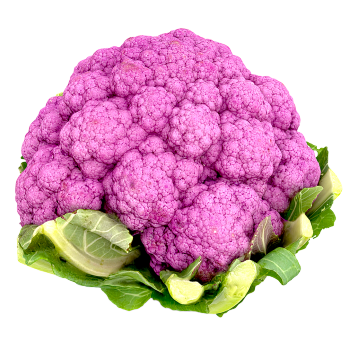
Purple cauliflower 3D model
Purple cauliflower is a herbaceous plant in the Brassicaceae family, with an upright plant shape, green leaves, no wax powder on the leaves, bright purple flower heads, and a semi-circular shape; Mid late maturing first generation hybrid purple cauliflower; The leaves are blue-green and grow upright. The plant has strong growth and is resistant to downy mildew, viral diseases, and black rot. The flower head is a bright purple red color with a smooth surface. Purple cauliflower is native to the eastern coast of the Mediterranean and was introduced to China around the early 19th century during the reign of Emperor Guangxu of the Qing Dynasty. Purple cauliflower has introduced purple varieties in recent years; I prefer to grow between 8 ℃ and 25 ℃, and use sowing and seedling cultivation for reproduction in spring and autumn. I am tolerant to fertilizers and water.

Beef heart cabbage 3D model
Beef heart cabbage has strong cold resistance, is not easy to sprout, has a concentrated maturity period, tender leaf balls, low fiber, low moisture content, and medium to high quality. The yield per 667 square meters is 2000-2500kg. High output. As an autumn and winter type cabbage, cowheart cabbage has poor heat resistance, and planting in summer may affect its marketability. Therefore, it is not recommended to use it as a summer sowing variety. Beef heart cabbage has strong cold resistance and can overwinter during the seedling stage. It has good early maturity and can be cultivated three seasons a year in the Yangtze River Basin.
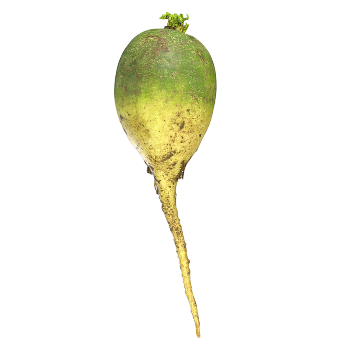
Inca Carrot 3D Model
The Inca radish (scientific name: Lepidium meyenii Walp.) is a plant in the Brassicaceae family, belonging to the Asparagus genus. Its leaves are elliptical and its roots resemble small round radishes. The hypocotyl is thickened and fused with the root, forming a rough pear shaped tuber. The shape and volume of the roots vary greatly, including triangles, ellipses, or rectangles. The hypocotyl of maca may appear golden or pale yellow, red, purple, blue, black, or green.

Horseradish 3D model
Horseradish is a plant of the Brassicaceae family and the horseradish genus. Perennial upright herb, up to 1 meter tall, completely hairless. The root flesh is enlarged, spindle shaped, and white. The stem is thick and has longitudinal grooves on the surface. Basal leaves are oblong or oblong ovate in shape. The inflorescence is arranged in a conical shape; Ovary oval, approximately 2 millimeters long. Short horned fruit is oval to elliptical in shape, measuring 3-5 millimeters in length and approximately 1.5 millimeters in width; The fruit petals are raised and have reticular veins; Diaphragm spindle shaped, white membranous, containing 2 rows of 4-6 seeds per row. The seeds are small, flattened, membranous, and light brown in color; The edge of the cotyledons depends on the embryonic root. The flowering period is from April to May, and the fruiting period is from May to June.

common head cabbage
Cabbage is a biennial or perennial herbaceous plant in the Brassicaceae family. The lower leaves of the plant are large, with a feather like and deeply lobed large head, wavy edges, and fine round teeth. The upper leaves are oblong, with the entire margin and embracing the stem. All leaf flesh is hairless and covered with white powdery frost; The flowers are light yellow in color, with inverted petals; Long horned fruit cylindrical; Seed spherical, gray brown in color; The flowering period is from May to June; The fruiting period is from July to August. Due to its high glucose content, it has a slightly sweet taste when eaten, and its leaves are similar to the Chinese native "Polygonum blue" and are shaped layer by layer into a spherical shape, hence the name "cabbage".

Chinese cabbage
The biennial herbaceous plant of the Brassicaceae family and the Brassica genus in Chinese cabbage is rich in vitamin C and has strong antioxidant properties, which can prevent the production of carcinogens and inhibit the proliferation of cancer cells. Height of 40-60 centimeters, often hairless throughout the plant with numerous basal leaves, large in shape, inverted ovate oblong to broadly ovate; The petiole is white and flat; The upper stem has leaves that are oblong ovate, elongated lanceolate to elongated lanceolate; The flowers are bright yellow with inverted petals; The long horned fruit is thicker and shorter, flattened on both sides, and upright; The seeds are spherical in shape and brown in color. Chinese cabbage is classified as a subspecies of Chinese cabbage in the Brassica species, and is divided into four varieties: loose leaf, semi heading, flower center, and heading.

Kale
Kale (scientific name: Brassica oleracea var. acephala DC.) is a biennial herbaceous flower of the Brassicaceae family and the Brassica genus. Kale leaves are wide and spoon shaped, with smooth and hairless leaves and fine wavy folds at the edges; The petiole is thick and winged; In April, it will sprout and bloom, with colors ranging from golden yellow to orange yellow; Long horned fruit cylindrical; The seeds are spherical in shape and gray brown in color. The observation period is from December to March of the following year. In Wu Wei's book "Cultivation Techniques for Protected Special Vegetables," it is written: "The whole plant of kale is shaped like a peony, so people also call it leaf peony

Cabbage balls
Brussels Sprout, also known as soup cabbage, is a type of cabbage. Brassica oleracea, a small cabbage in the Brassicaceae family, is widely cultivated in Europe and the United States. Originating from the Mediterranean coast, with fresh and tender small leaf balls as the edible part, it has been one of the important vegetables in European and North American countries for nearly two centuries, with a small amount of cultivation in Taiwan Province, China.

3D model of cauliflower
Cauliflower (Brassica Oleracea Var. Botrytis Linnaeus) is a variety of wild cabbage in the Brassicaceae family and the Brassica genus. Two year old herb, 60-90 cm tall, covered in powdery frost; The stem is upright, thick, and branched; Basal leaves and lower leaves are oblong to elliptical in shape; The upper leaves of the stem are small and sessile, oblong to lanceolate, and embrace the stem; At the top of the stem, there is a milky white fleshy head like body densely composed of total flower stalks, flower stalks, and undeveloped flower buds; The inflorescence is terminal and axillary; The flowers are light yellow, then turn white; The seeds are wide elliptical in shape and brown in color. The flowering period is in April and the fruiting period is in May.
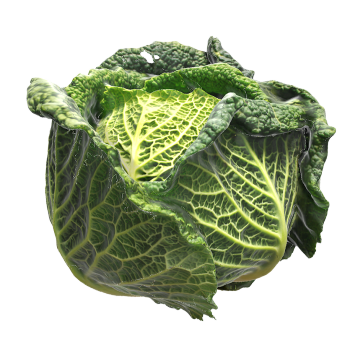
3D model of wrinkled cabbage
Wrinkled cabbage is a 2-year-old herbaceous plant of the Brassicaceae family and the Brassica genus. It is one of several varieties of cabbage, covered in powdery frost. Unbranched, green or grayish green. The leaves and leaf balls are covered with folds, and the growth of thin-walled tissue on the leaves is faster than that of leaf veins, resulting in a larger leaf surface area. When the leaves are not large, they form leaf balls and the base embraces the stem; The inflorescence is terminal and axillary; The flower is light yellow in color, with upright sepals that are linear and oblong in shape. The petals are wide and elliptical, with an inverted or nearly circular shape. The veins are prominent, with a slight deficiency at the top and a sudden narrowing of the base into claws. The midrib protrudes, and the beak is conical in shape. The stem is thick and erect, and the seed is spherical and brown. Flowers bloom in April and bear fruit in May.

3D model of big red radish
Da Hong Radish is a type of radish, also known as "Northeast Red Radish", "Red Radish", or "Northeast Da Hong Radish". It belongs to the "Brassicaceae Radish Genus" and is a biennial herb with fleshy roots that are spherical in shape, red in color, and white in color. Da Hong radish is one of the specialties in Northeast China, which has high nutritional and medicinal value due to factors such as climate and variety. Carrots have a slightly warm nature, green radishes have a slightly cold nature, and white radishes have a flat nature. Carrots, due to their red skin, can enter the heart, lungs, and stomach meridians, and have functions such as clearing heat, detoxifying, removing dampness, dispersing blood stasis, nourishing the heart and clearing blood, strengthening the stomach and reducing food intake, resolving phlegm and cough, regulating qi, facilitating bowel movements, generating fluids, and quenching thirst.

Purple cabbage 3D model
Purple cabbage, also known as red cabbage or red cabbage, commonly known as purple cabbage, is a variety of cabbage species in the Brassicaceae family and the Brassica genus. It is a type of heading cabbage. Purple cabbage leaves are purple red in color, with wax powder on the surface and nearly circular leaf balls. The nutritional components of purple cabbage include carbohydrates, protein, folate, ascorbic acid, vitamin A, tocopherol and other vitamins, as well as minerals such as copper, iron, selenium, calcium, manganese, zinc, etc.

broccoli
Brassica oleracea L.var. italica Plenck is an annual or biennial herbaceous plant in the Brassicaceae family, belonging to the Brassica genus. It has a thick base of the main root and a well-developed root system, mainly distributed in the 30 centimeter plow layer; The surface of the flower stem is smooth; The cotyledons are inverted heart-shaped, while the true leaves are green ovate with white powder on the surface. The stems and leaves are usually small and green; The flowers are yellow, and the inflorescence stems are fleshy. The flowering period is in June or September. Because the broccoli is native to Italy along the Mediterranean coast of Western Europe and looks like a flower, it is called "broccoli".

White violet specimen
Violet is a biennial or perennial herbaceous plant in the family Brassicaceae and genus Violet. Its plant is 60 centimeters tall and covered with gray white branching soft hairs; The stem is upright and has multiple branches; The leaves are oblong to lanceolate or spoon shaped; The inflorescence is terminal and axillary, with many large flowers. The inflorescence axis is elongated during the fruiting stage, and the petals are similar to oval shaped purple red, light red, or white. The flowers are fragrant, bright, and have rich colors; The seeds are dark brown, flat, and nearly circular in shape, with a diameter of about 2 millimeters; The flowering period is from April to May.

Popular Models
Honey Badger (3D animated model)
192 View
Guinea fowl (3D animated model)
163 View
Wild Goose (3D animated model)
185 View
Red Fox (3D animated model)
153 View
Random Model
Wooden statue of St. Florian
494 View

Soviet helicopter Mi-26
1248 View

Haibaolong 3D Animation Model
988 View

Siamese Cat 3D Animation Model
1227 View

AMX 240 X-ray machine
826 View

Old distribution box
917 View


Floor lamp
666 View
